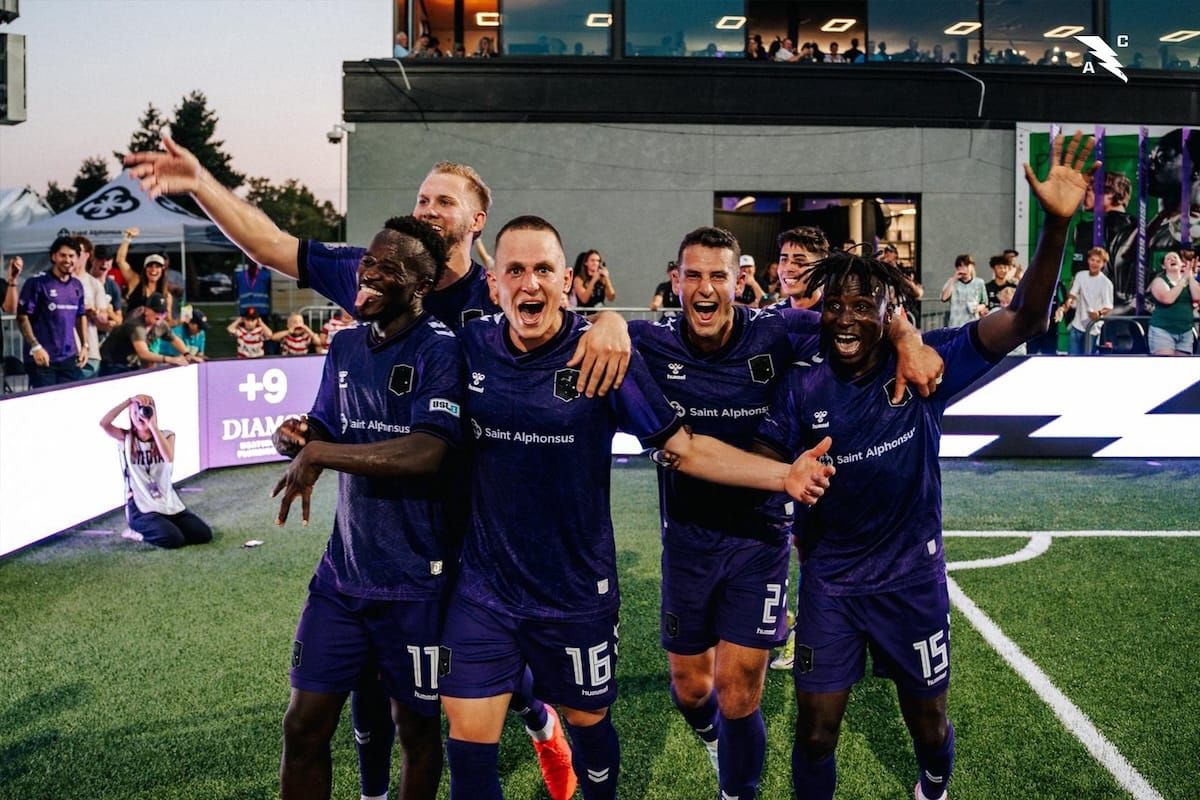
When a space shuttle blasts off into the sky, it’s a magnificent thing. You aren’t thinking about the rocket boosters that get left behind as the launch happens. Athletic Club Boise’s announced exit from USL League One for the USL Championship is a boon for the larger viability of the USL ecosystem, but it also supports the idea that League One is being left down on earth.
Boise joined the third tier as an expansion club this season, having already constructed a self-owned stadium with roughly 7,000 seats, which will be expanded above the 10,000 mark for the 2027 campaign. Paired with their league-leading attendance numbers (the byproduct of strong marketing and a keen market understanding) and terrific on-field operations, Boise has been a model startup.
Per club CEO Brad Stith, the chance to jump came via “invitation.” In USL terms, Boise are yet another example of the Lexington SC model: a club that starts in League One, but with long-term, stadium-driven aspirations to get out of dodge. It’s easy to imagine clubs like Portland Hearts of Pine or Union Omaha with concrete stadium plans blazing the same trail – unless, of course, the impending launch of a promotion and relegation system precludes the classic “pay your way” path up the ladder.
Indeed, the USL’s intention to launch a first-tier league as part of a pro-rel system muddies the waters for League One. League executives have clarified their intent to operate the so-called USL Premier and the USL Championship as single-table, 20-team divisions; League One is meant to be a massive, regionalized tier underneath them both.
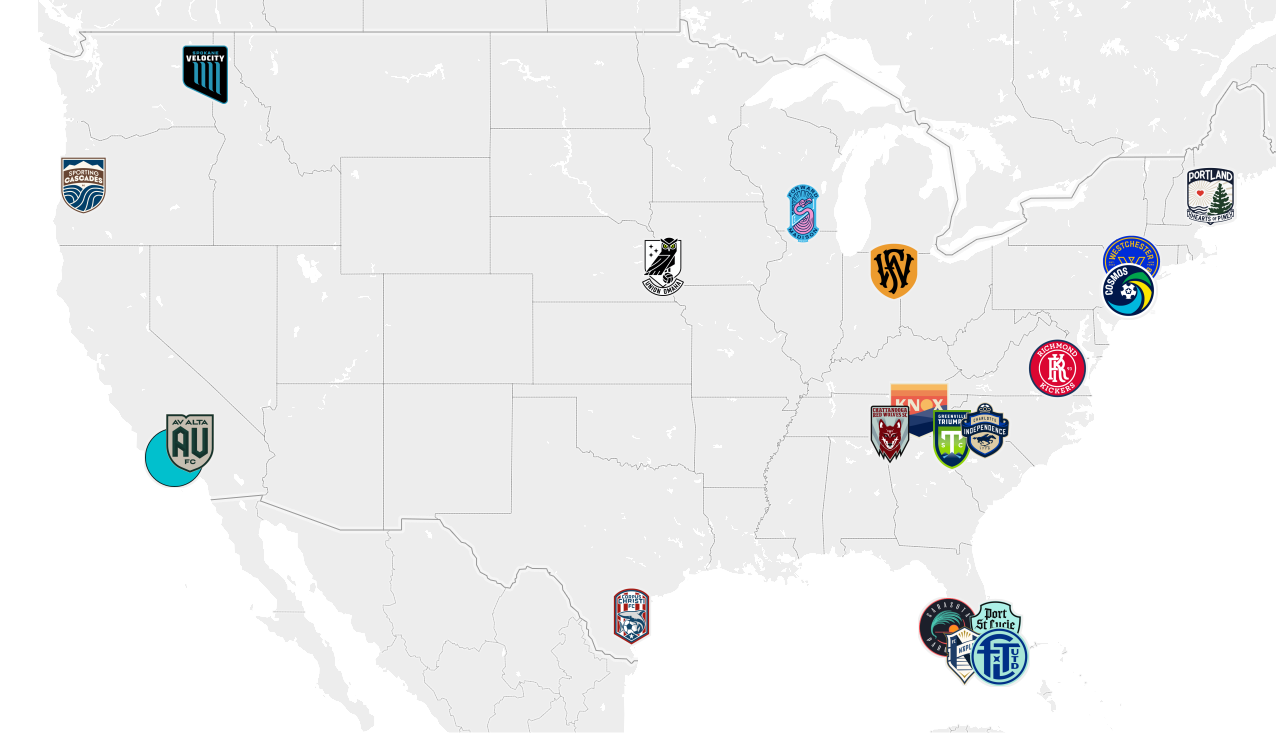
For now, that’s a pipe dream. With Boise out, League One appears set to begin the 2027 season with 20 teams. Four expansion clubs – Fort Lauderdale United, Sporting Cascades, Port St. Lucie SC, and an unnamed effort in Southern California – are set to join the division. If you charitably assume that all four will successfully launch without any countervailing contractions, League One is still a mile away from a fully regional model.
The merits of a regional structure are debatable if you’re a League One stakeholder. Under a new USL-wide revenue-sharing model, rising media rights fees and continued expansion will, in theory, prove profitable for clubs. Still, if you think a mid-July matchup between Port St. Lucie and Sarasota as part of the southeastern division of an 80-team league moves the needle for CBS or ESPN, I’ve got a bridge (and an expansion franchise) to sell you. Moreover, explosive growth around new clubs will, inherently, reduce the share of money that each League One club receives – far more so than in the slimmer Championship and Premier divisions.
As modest as the national fandom for the USL’s various leagues might be, regionalization entirely precludes that buy-in. In a single table format, an Antelope Valley fan must care about Fort Wayne’s results relative to their playoff chances; that’s less true when the clubs are anonymized in fenceposted geographic buckets.
The current version of the USL, for all its warts, isn’t split into “haves” and “have nots” to a major degree. Orange County SC, considered one of the anchor clubs of the USL Championship, reported $3.6 million in total income and a $6.7 million net loss in 2024; the Greenville Triumph, a club of comparable status a tier down, earned $2.5 million in income and posted a $5.5 million net loss in 2024. There’s a gap, but USL organizations face down a shared financial reality. The changing structure of the league might be a net positive, but it could make League One a second-class citizen.
Maybe that’s too bleak a conclusion to draw in the context of Boise’s genuinely heartening success story. Even so, it’s hard to deny that League One is beginning to feel like a testing ground and a launchpad rather than a division whose fans and clubs are rewarded with their own sense of dignity.
Boise’s back end
We’ve talked about Athletic Club Boise’s major off-the-field swing, but what about the team on the pitch? Forging a competent defense from an expansion roster is difficult in the best case; creating the best defense in the entire league in that context is nigh unprecedented. After Week 28, Boise remains the stingiest defensive side in all of League One.
Led by League One stalwarts like Jake Dengler and Jake Crull as well as USL Championship vets like Jonathan Ricketts, Nick Moon, and Blake Bodily, Boise hasn’t lacked experience at the back. Even so, their underlying numbers – see 1.01 xG and merely 11.9 shots against per game prior to Friday’s 2-1 win against New York – have been sublime. That trend continued against the Cosmos, with Boise allowing just 1.1 xG and only conceding a last-ditch goal in garbage time with their win secured.