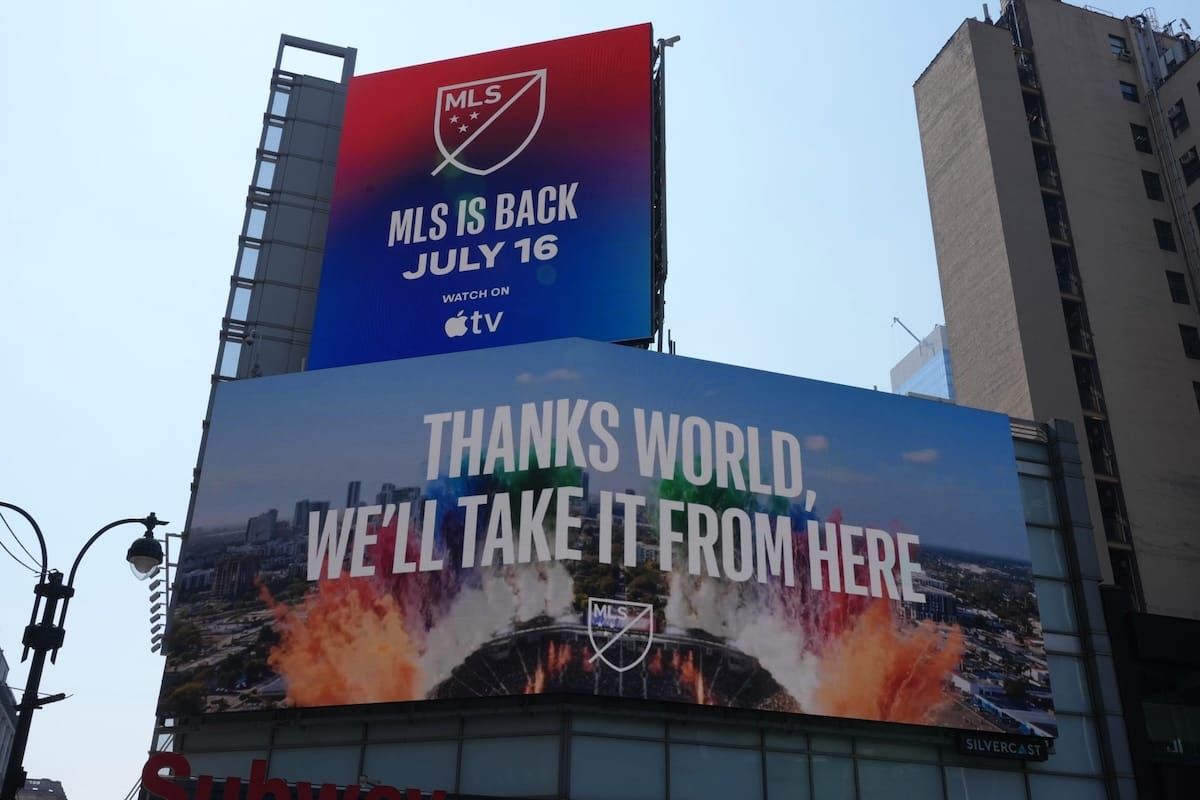
The World Cup is over. MLS is back. Is anything different for the league?
This summer’s spectacle was supposed to supercharge MLS — not just according to optimistic fans, but according to those steering the direction of the league and the sport in the United States. “There’s no doubt that this is going to be rocket fuel that’s going to help give us the momentum that we’ve all been looking for,” MLS commissioner Don Garber said after the U.S., Mexico, and Canada officially landed the 2026 World Cup.
Of course, the World Cup was “rocket fuel”. More of the American public than ever before tuned into the tournament. Viewership records were set, broken, and set again.
But did MLS build the rocket to take advantage of the World Cup’s fuel?
Late last year, the league announced its plan to shift to a summer-to-spring calendar that more closely aligns with Europe’s biggest leagues.
Despite having eight years to prepare for a post-2026 World Cup reality, MLS failed to have its new schedule ready to launch immediately after the tournament. The biggest World Cup ever could have served as a launchpad into the theoretical 2026-27 MLS season. Instead, MLS will finish this season like normal. Then the league will play an awkward shortened season in the first half of 2027 before finally kicking off the new format in July of next year.