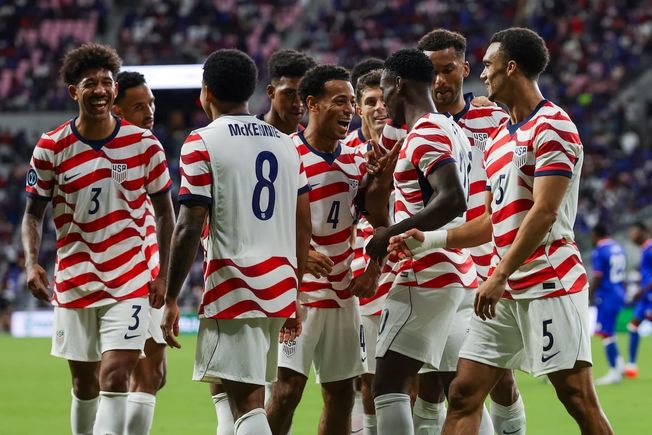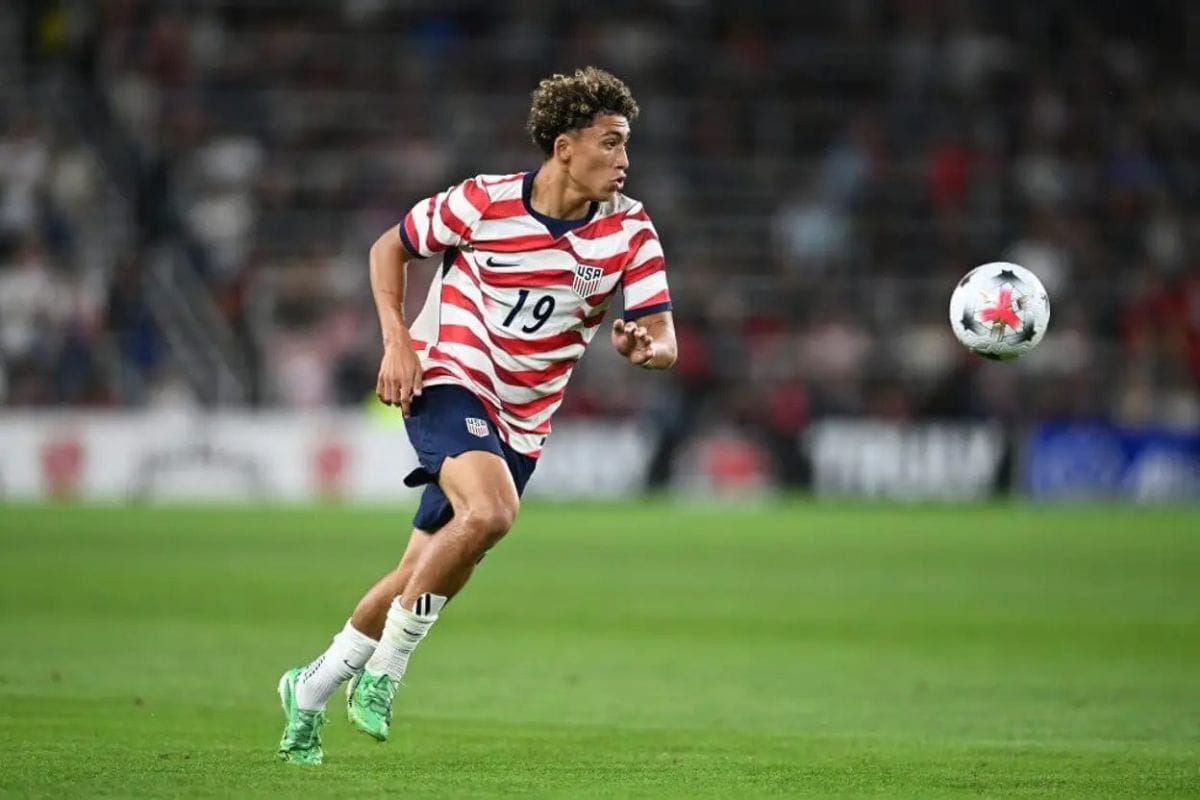
Julian Hall is the latest focus of the American soccer hype machine – and for good reason.
He’s scored five goals in his first six appearances for the U.S. men’s national team, albeit in not the most competitive matches. In MLS, his 13 goals and three assists were enough to see him finish second on the annual 22 Under 22 list, behind only Cavan Sullivan. This past summer, despite signing a new four-year contract with Red Bull New York, he was subject to transfer speculation linking him to RB Leipzig, Atletico Madrid, Newcastle, Hull City, and Marseille. Even Bayern Munich were reportedly sniffing around back in March.
But at only 18 years old and one with just one full season as a starter under his belt, is Hall really ready to make such a big jump to Europe’s elite?
Hall has been one of the centerpieces of the so-called “Baby Bulls” this season under Michael Bradley, playing mostly as a center forward. But there are many kinds of center forwards, so what kind is Hall?
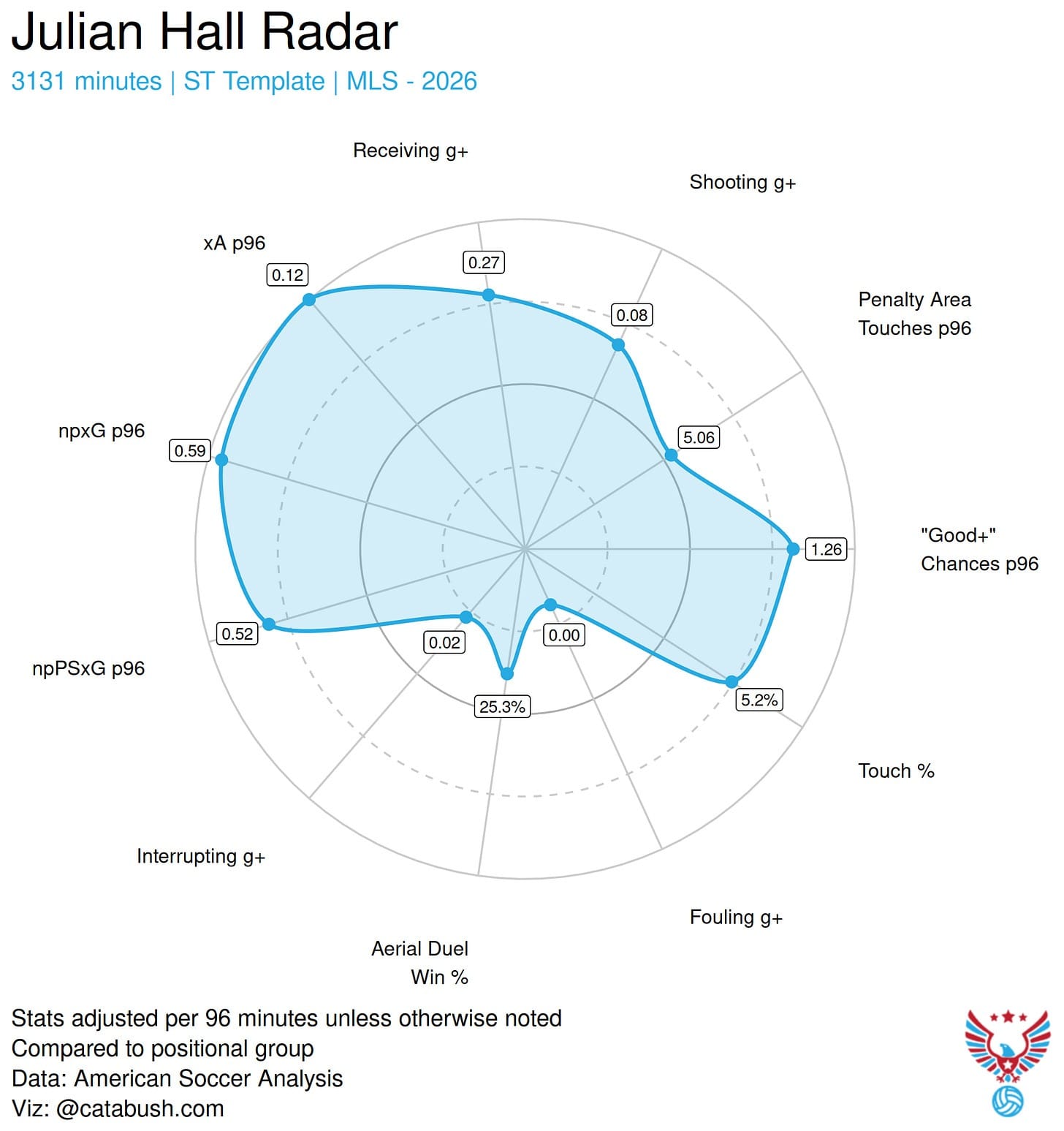
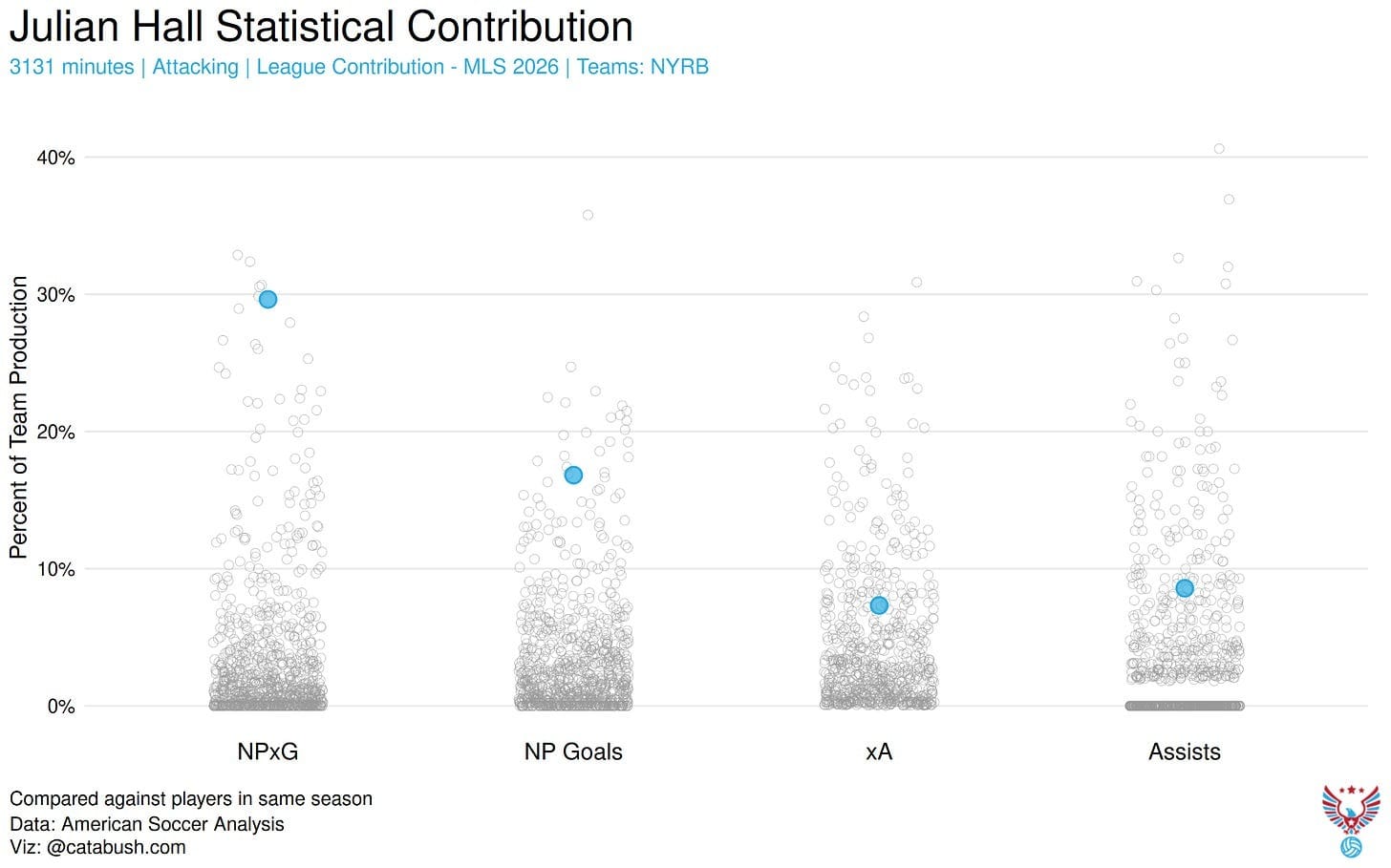
Taking a look at his radar from American Soccer Analysis, we see that Hall is pretty good at, well, striker things. Scoring, finding good chances, stuff like that. He doesn’t get an especially high number of touches in the penalty area, has a very low aerial duel win percentage, and, as we might expect, his statistical contributions are most significant when it comes to goals.
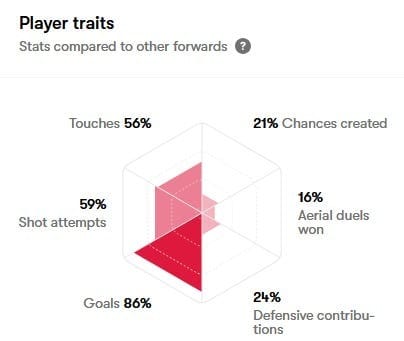
Looking at another profile source, this time via FotMob, we again see high scoring and low aerial duel wins. We also see low chances created and defensive contributions, which is surprising considering his budding reputation as a pressing forward.
The tape aligns with the numbers: in 2026, Hall played like a slightly more complete poacher. He’s a part of build-up play, but not a creator. He prefers the ball to feet or into space for short, sharp runs rather than getting on his horse for long balls. He has a tendency to arrive at the right time, losing his defender with smart individual space creation as he comes in and out of blind spots, particularly in the box. His decision making is also impressive, often knowing when to attack and when to wait to bring his team into the play.
Breaking down Hall's attacking skillset
We can see a great example of this decision making in a recent game against the New England Revolution. Hall waits on the far side, leaving space to make a diagonal run.
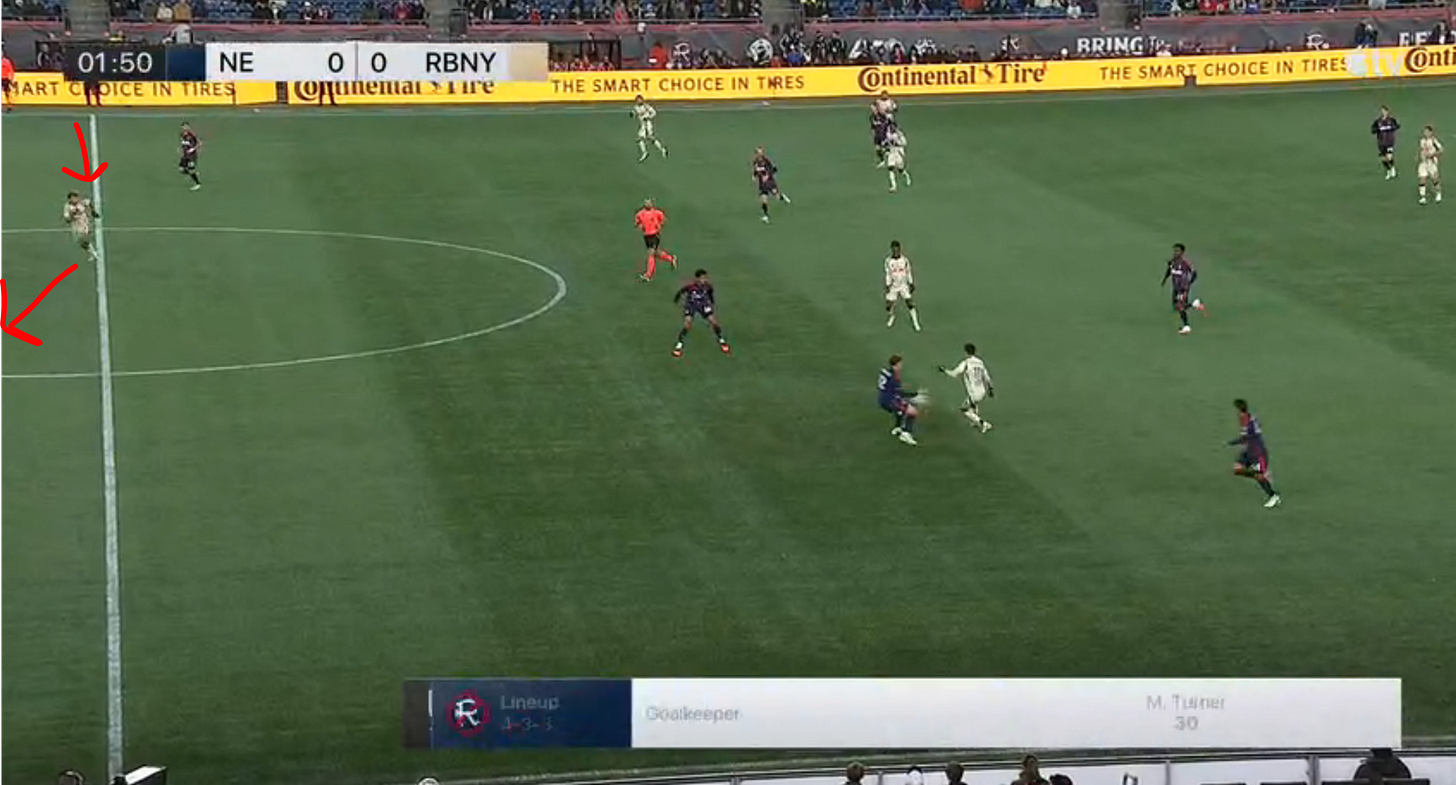
After receiving the ball, he faces up with the defender. Now, this is another interesting thing to note about Hall: he doesn’t typically try to take players one-v-one. When he does, his success is mixed. Take this ongoing play against New England. An attacker who rates himself in one-v-ones would probably see that space behind the defender and try to push into it.